

The Basics of Orthogonal Frequency-Division Multiplexing (OFDM)
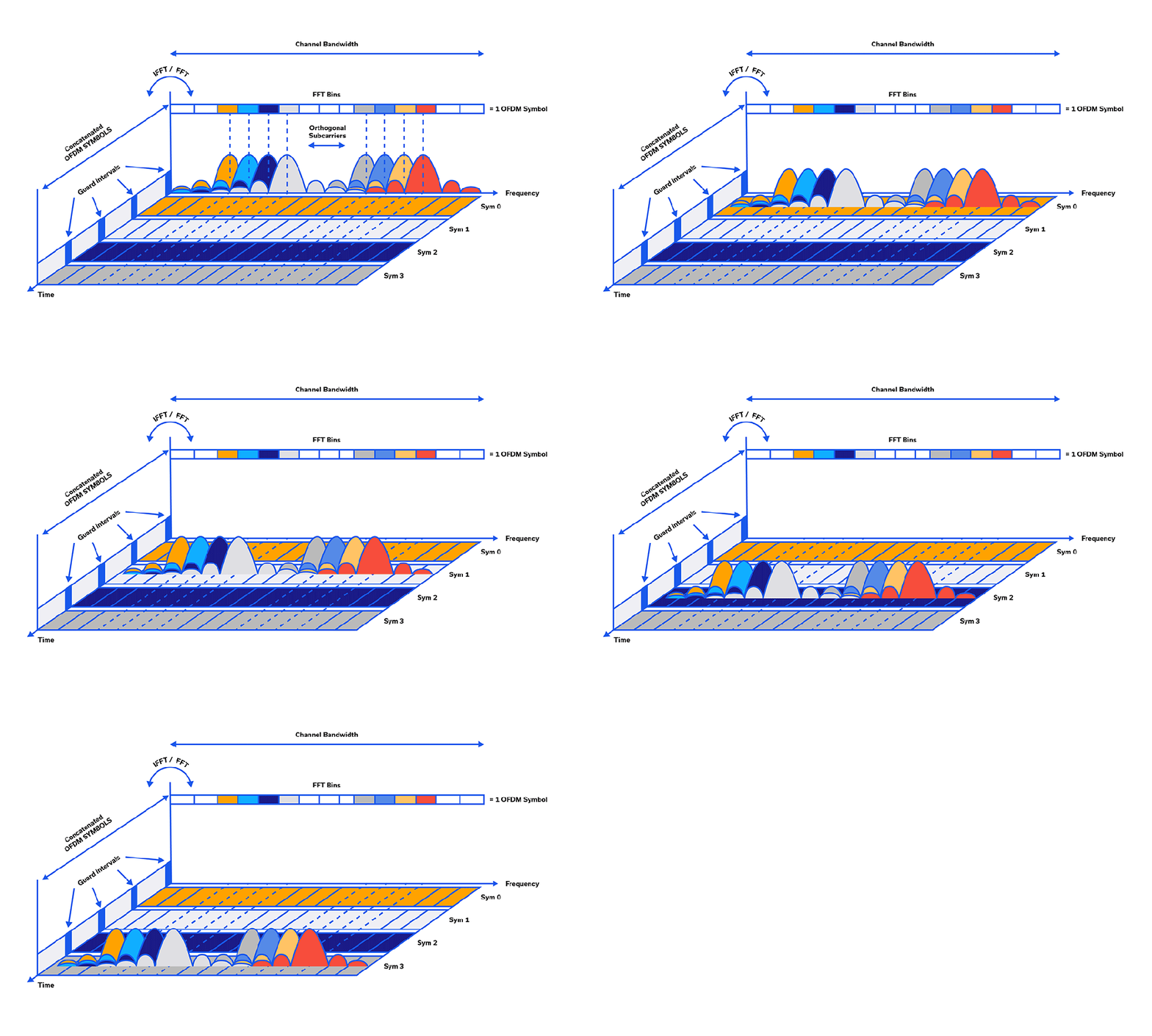
While traditional Frequency Division Multiplexing has been around for over 100 years, Orthogonal Frequency Division Multiplexing (OFDM) was first introduced by Robert W. Chang of Bell Laboratories in 1966.1,2,3,4 In OFDM, the stream of information is split between many closely-spaced, narrowband subcarriers instead of being relegated to a single wideband channel frequency.5 Single-channel modulation schemes tend to be sequential whereas, in OFDM, many bits can be sent in parallel, simultaneously, in the many subcarriers.5 So many bits can be packed onto the subcarriers simultaneously that the data rate of each subcarrier’s modulation can be much lower than that of a single-carrier architecture.
MMIC Package Customization – Footprint-Compatible Solutions for Your System
MMIC Package Customization – Footprint-Compatible Solutions for Your System Obsolescence Management and EOL Part Replacement LTB (Last Time Buy) and EOL (End of Life) are among the most unwelcome acronyms in the ranks of Procurement and Engineering. Component obsolescence saddles customers with the burden of tying cash up in inventory on their balance sheet, or […]
A Brief Overview of Phased Array Systems

The concept of the phased array antenna system was first put into practice by German Physicist Ferdinand Braun and his assistants in the spring of 1905. In short, he and his assistants carefully controlled the excitation phase of each antenna in an array and determined that the combined effect exhibited significant directivity. In the nearly 12 decades since Braun first described the phased array antenna system, this technology has become commonplace in 4G/5G communications, electronic warfare, radar, nonlethal weaponry, and advanced imaging applications.1
This article begins with an overview of the evolution of phased array systems through history. A functional description of their basic operation in both analog and digital domains is provided, and a brief survey of common and emerging applications is given by way of example.
RF Pulse Modulation: Fundamentals, Applications & Design Techniques
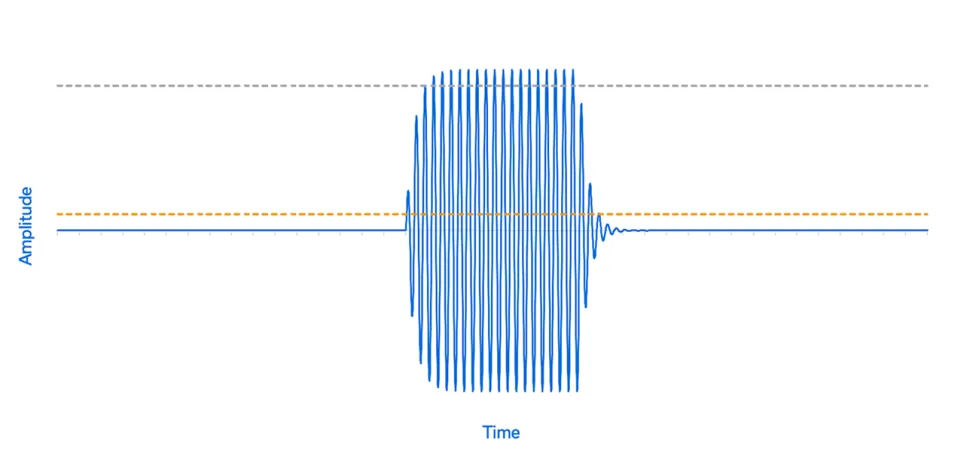
Pulse modulation has been around for over 125 years. In 1887, German physicist Heinrich Hertz built the first experimental spark-gap transmitters (electromagnetic pulse modulators), with which he proved the existence of radio waves.1 In 1888, using 455 MHz radio waves, he studied the ability of radio waves to be reflected from metallic objects and refracted by dielectric media.2 Hertz confirmed James Clerk Maxwell’s work from 1865, which was simplified by Oliver Heaviside in 1884. Hertz’s work also spawned early target detection when, in 1904, a patent for “an obstacle detector and ship navigation device,” based on the principles demonstrated by Hertz, was issued in several countries to German Engineer Christian Hülsmeyer.2 Hülsmeyer’s British patent (September 23, 1904) was for a spark-gap-type, full 600 MHz pulsed radar system that he called a telemobiloscope.
Understanding RF/Microwave Push-Pull Amplifier Design
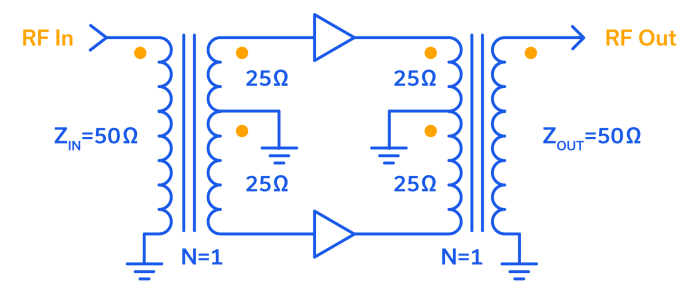
Remarkably, the concept of the push-pull connection spans three centuries. William W. Dean of the Bell Telephone Company of Missouri first described the push-pull-connected telephone transmitter in Patent No. 549,477, dated November 5, 1895.1 Next, Sir John Ambrose Fleming invented the first vacuum tube in 19042 and while Lee De Forest added the grid to Fleming’s “valve” in 1906, calling it the “audion,” it was Fritz Lowenstein in his April 24, 1912 patent application who first discovered that applying a negative bias to the grid of De Forest’s tube turned it into an audio amplifier.
Optimizing Transistor Stages for Different Operating Bandwidths
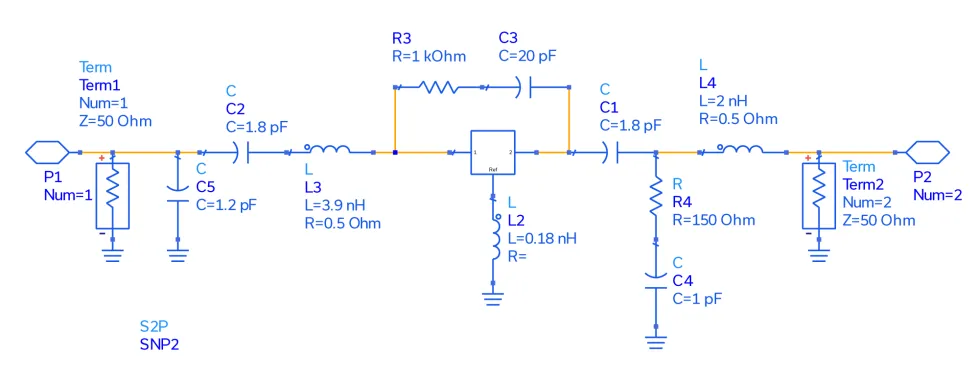
Since their invention by John Bardeen, Walter Brattain and William Shockley at Bell Labs in 1947, transistors have become a defining (if not the defining) feature of the contemporary technology landscape. Electric vehicles can have over 5 billion transistors in a given build, and today’s smartphones more than 10 billion! While their most common and familiar uses reside in the digital world, transistors are an essential element in RF circuits and systems, and while often integrated into more complex, multi-function devices, the simple transistor is still an essential tool in the designer’s toolkit.
Boost Your Knowledge: A Comprehensive Guide to RF Amplifiers – Types and Applications Explained
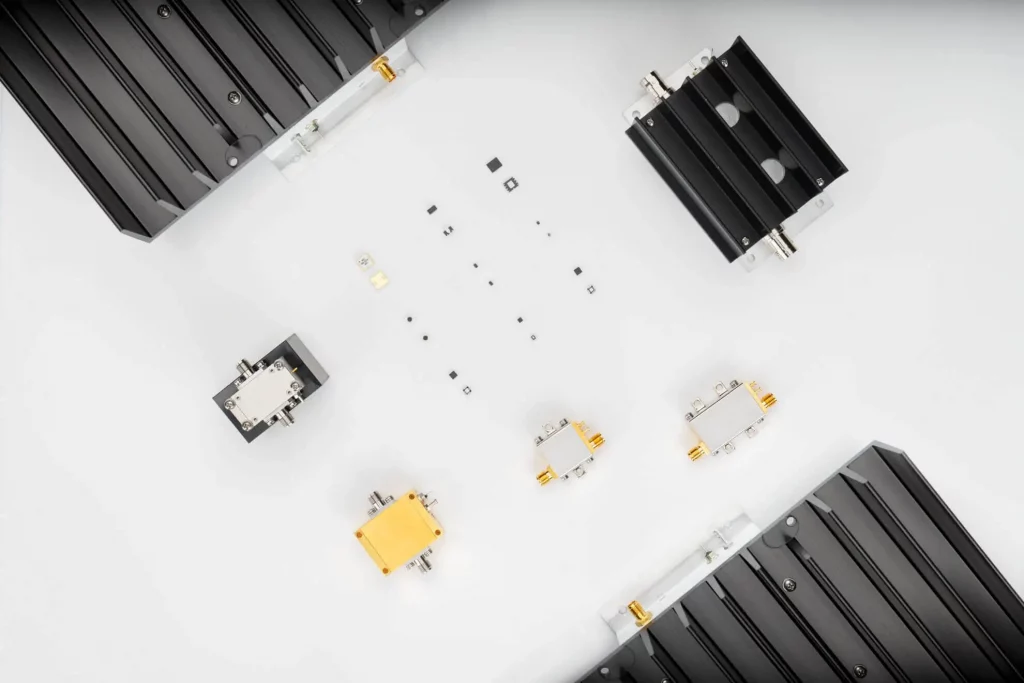
Radio Frequency (RF) amplifiers are electronic components that are used to amplify radio frequency signals. These components can be found in a wide range of applications, including wireless communication systems, television and radio broadcast systems, and medical imaging equipment. RF amplifiers are also used in test and measurement equipment, as well as in radar and satellite communication systems.
There are several different types of RF amplifiers, offering unique characteristics and uses.
RF/Microwave Balanced Amplifiers and Their Applications
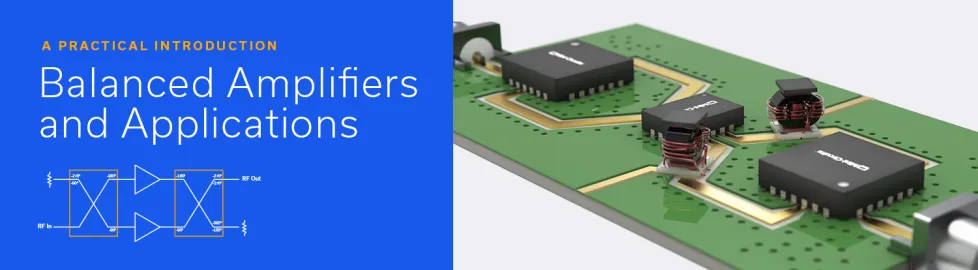
A balanced amplifier is the proper term for a pair of devices operated in quadrature phase and combined to amplify a signal. Quadrature simply means that signals incident upon the devices are 90⁰ out-of-phase with one another. The term “quadrature-combined pair” (often shortened to simply “quad-combined pair”) is perhaps just as common as “balanced amplifier,” and both are as identical as “PTFE” is to “Teflon®.”
This article explains the use of quadrature hybrid splitters and combiners (also often called hybrid couplers) in balanced amplifier configurations and the advantages of combining two amplifier devices in this fashion. Two of the most common applications for the balanced amplifier (quad-combined pair) are described by way of example.
Every Block Covered: Cascaded P1dB and IP3 in a 26 GHz 5G Front-End
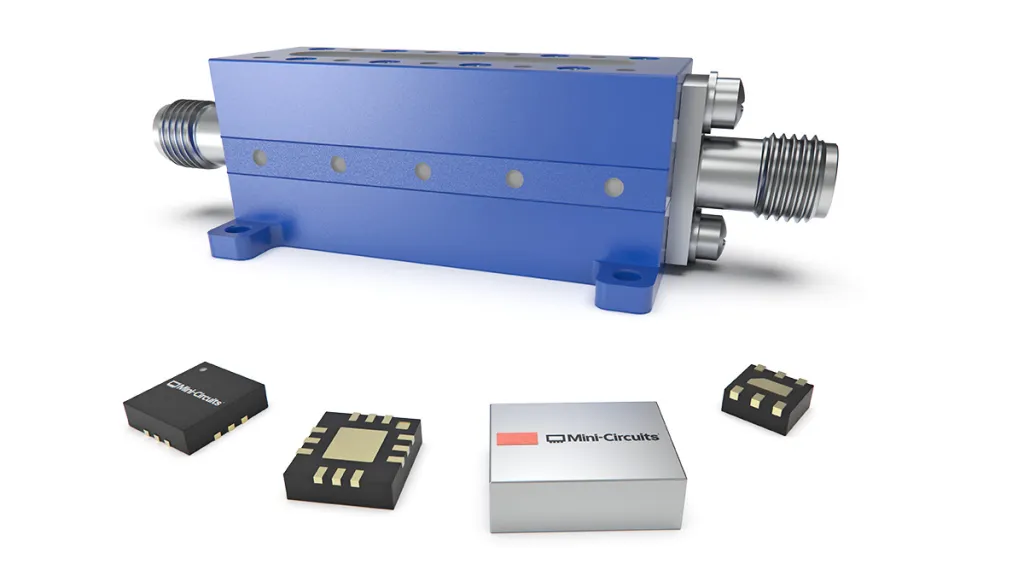
The goal of this article was to provide students and designers alike with a deeper understanding of the equations behind the cascading of P1dB and IP3 as the system expands to include multiple nonlinear components such as those utilized in the RF, frequency conversion and IF sections of a receiver chain. A 5G RF front end was presented for the 24.25 – 25.1 GHz portion of the 5G n258 frequency band comprised of all SMT parts. Calculated data for linearity parameters was presented for individual components in the signal chain as well as cascaded at each stage. The equations used to calculate those results were provided, and an examples were given showing how to calculate cascaded linearity parameters OP1dB and OIP3 from one stage to the next.
Every Block Covered: Noise and Signal-to-Noise Ratio (SNR) in a 26 GHz 5G Front-End

The 24.25 to 27.5 GHz frequency range is also known as the “wider 26 GHz band” or 5G band n258. The Australian Communications and Media Authority (ACMA) “recognized that the wider 26 GHz millimeter wave (mmWave) band was at the forefront of the delivery of mmWave 5G wireless broadband services globally.”2 Consequently, in April 2021, a major portion of that spectrum was auctioned off to operators, predominantly in the 25.1 to 27.5 GHz frequency range.2 The 24.25 to 24.7 GHz band was identified for indoor use and the 24.7 to 25.1 GHz band for indoor/outdoor use.2 For the purposes of the RF front end in this application note, our focus will be on this lower, 24.25 to 25.1 GHz portion of the Australian 5G frequency range.