
MCDI - Mini-Circuits Exclusive Representative in Israel

Category: Filters

Understanding Lumped Element Filters

Before discussing filter designs and differentiating any given filter topology from another, it’s important to review the fundamentals of filter structures and their function. A filter is a two-port, passive, reciprocal device that allows frequencies within a given band to pass through while blocking signals outside the desired band.

There are many filter types available to the system design engineer including RLC filters, active RC filters, crystal filters, cavity filters, ceramic resonator filters and SIW, SAW and BAW filters. Filters may be fabricated using lumped elements, thin and thick film microstrip and stripline, LTCC and other manufacturing technologies. This article will focus on lumped element filters.
Read More »

Reflectionless Filter Basics: A Brief History of the Genesis of Reflectionless Filters

The advent of broad bandwidth amplifiers, analog-to-digital converters (ADCs), digital-to-analog converters (DACs), and software-defined radios has brought about growing interest in broadband communications, radar, and sensing applications. For these applications, there is often a need to preserve the highest sensitivity and dynamic range possible within the receiver signal chain and to mitigate the number and strength of harmonics and spurious content in the transmitter signal chain. This is a substantial challenge considering the nature of non-linear components within these circuits, namely compression-mode amplifiers, mixers, multipliers, and frequency-conversion electronics.

Read More »
Mini-Circuits | MCDI - FILTERING WITHOUT REFLECTIONS

FILTERING WITHOUT REFLECTIONS: Flattening Multiplier Chain Conversion Efficiency & More

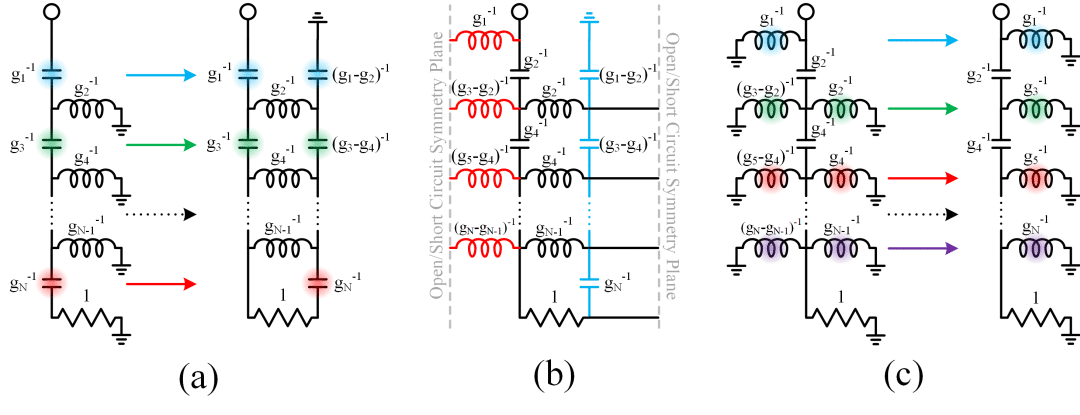
A new class of filter, which exhibits broadband matched impedance at its ports, has recently been invented and made available. This new device, the reflectionless filter, has demonstrated a variety of benefits when used to replace conventional filters in a signal chain. This white paper briefly introduces the reflectionless filter and compares conventional filter and reflectionless filter behavior. Use cases are presented examining how reflectionless filters can improve system performance when used with mixers, ADCs, and receiver signal chains. Lastly, an experiment is described and test results presented to compare the conversion loss ripple in multiplier chains when reflectionless and reflective filters are used to filter spurious signals.

Read More »

Reflectionless Filters Improve Linearity and Dynamic Range in Microwave Systems

Filters are fundamental building blocks of nearly every modern RF/microwave system used to eliminate unwanted signals in receiver and transmitter architectures. Until recently, study and research in practical filter design has been largely devoted to topologies in which rejection of stop band frequencies is accomplished by reflecting undesired signals back to the source. Meanwhile, there are many applications in which these reflections produce intermodulation products, gain ripples, and other problems in system performance. For example, non-linear devices such as mixers, multipliers and high-gain amplifiers which respond to out-of-band frequencies are highly sensitive to the reflections caused by conventional filter designs. This becomes especially challenging as filters are often needed near or adjacent to active devices in the signal path to better define bandwidth or suppress unwanted harmonics.

Read More »

מסננים ללא החזרות משפרים את נקודת ה IP3 במערכות של ממירים מעלים וממירים מורידים

מאז שהמסננים ללא החזרות בסדרת X של Mini-Circuits יצאו לשוק, נערכות בדיקות רבות להערכת היתרונות של המוצרים המהפכניים האלו בהשוואה למסננים רגילים. בעוד שלמסננים רגילים יש החזרה מלאה בפס החסימה (stopband), במסננים ללא החזרה משתמשים בטופולגיית מסנן חדשנית הרשומה כפטנט, שבה אותות פס החסימה נבלעים ומגיעים לסיומת באופן פנימי, מונעים בכך רבות מבין הבעיות המערכתיות הנגרמות על ידי החזרות בשרשרת האותות. יכולת חדשה זו הופכת את המסננים ללא החזרות למסננים שמתאימים לשימוש ביישומים רבים, מעבר ליישומים שבהם משמשים מסננים רגילים בדרך כלל. אחד היישומים הנפוצים והמעשיים ביותר מבין יישומים אלו הוא סינון בכניסות וביציאות של ערבלים.

Read More »

יתרונות החיבור בטור של מסננים ללא החזרות

מסננים שמחוברים בחיבור טורי משמשים באופן נפוץ כדי לשפר את הדחייה בפס החסימה ואת התלילות בפס המעבר. אפשר להשתמש בטכניקה הזו גם כדי לשלב מסננים מעבירי גבוהים ומסננים מעבירי נמוכים, כדי ליצור תגובה של מסנן מעביר פס. אמנם השימוש במסננים בחיבור טורי משיג את התופעות הרצויות האלו, אך מסננים קונבנציונליים מחזירים באופן מלא אותות בפס החסימה, והאות המוחזר יוצר גלים עומדים בנתיב האותות שבין דרגות המסנן. כל זה יכול ליצור בעיות בפס ההעברה, למשל אדוות וחוסר יציבות בפאזה, שמעוותים את האות הרצוי ומפחיתים את ביצועי המערכת.

Read More »

Hi-Rel Components for Space Applications

The extreme operating conditions of the space environment combined with lack of access for repairs and zero tolerance for failure necessitate intensive qualification of electronic parts used in space missions. Mini-Circuits has a successful track record of screening components for space applications, and our experience in this area has led to robust testing and qualification programs for the parts we supply for these systems.

Read More »

ADVANTAGES OF CASCADING REFLECTIONLESS FILTERS

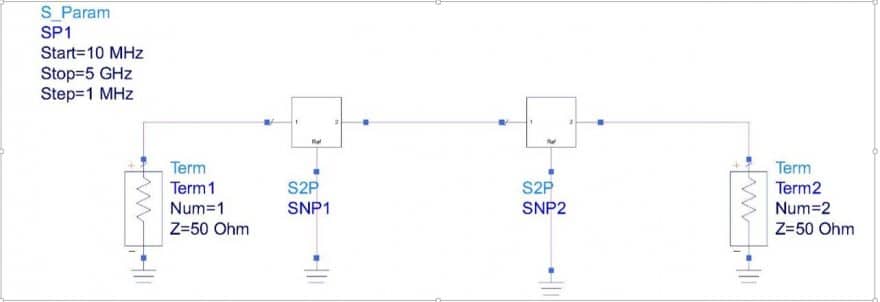
The insertion loss curves for the conventional filter exhibit an expected increase in stopband rejection when two filters are cascaded in series. However, obvious ripple appears across the stopband in the two-section curve. This is due to the unstable phase relationship between the through-signal and reflected signal. Additionally, unwanted ripple is present in the passband close to the band edge of the two-section curve. This is a result of return loss degradation in the passband and reflections in the transition. By contrast, the insertion loss performance for the reflectionless filter repeats itself nicely when cascaded in 2 and 3 sections without any of the ripples or distortion seen in the case of the conventional filter.
Figures 5e through 5h show the effect on return loss when the two types of filters are cascaded in multiple sections. The conventional filter exhibits significant degradation in input and output return loss in the passband when cascaded in two sections – by as much as nearly 20 dB in some regions. When the reflectionless filter is cascaded in two sections, on the other hand, input and output return loss varies over the passband, but the same degradation is not evident, and return loss actually increases at some frequencies relative to that of a single filter. This illustrates that an improvement in return loss in the passband and the stopband can be realized by cascading reflectionless filters versus conventional filters.

Read More »

מסננים ללא החזרות משפרים לינאריות ותחום דינמי במערכות מיקרוגל

מסננים הם אבני יסוד בסיסיות כמעט בכל מערכת מודרנית של ת”ר (RF) או גלי מיקרו, שמשמשים לסילוק אותות בלתי רצויים בארכיטקטורות של מקלטים ומשדרים. עד לאחרונה, מחקרים שבוצעו בנושא התכנון המעשי של מסננים הוקדשו בעיקר לטופולוגיות שבהן הדחייה של תדירויות בפס החסימה הושגה על ידי החזרה של אותות לא רצויים אל המקור. באותו זמן, קיימים יישומים רבים שבהם החזרות אלו יוצרות תוצרים של אפנון ביניים, אדוות בהגבר (gain ripple) ובעיות נוספות בביצועי המערכת. למשל, התקנים לא ליניאריים כגון ערבלים, מכפלים ומגברים בעלי הגבר גבוה, שלהם יש תגובה בתדירויות מחוץ לפס, רגישים ביותר להחזרות שנגרמות על ידי תכנונים שגרתיים של מסננים. מצב זה הופך להיות מאתגר במיוחד, מפני שלא פעם המסננים נדרשים בסמוך או בצמוד להתקנים אקטיביים הנמצאים במסלול של האות, על מנת להגדיר טוב יותר את רוחב הפס או לדכא הרמוניות בלתי רצויות.

Read More »

One last thing...

Aharon

Before you leave, you should know that MCDI’s professional team of Application Engineers  will be delighted to assist you in sourcing the right component. Just fill the form and we will be back to you shortly.