

Best Practices for Additive Phase Noise Measurements in Amplifiers
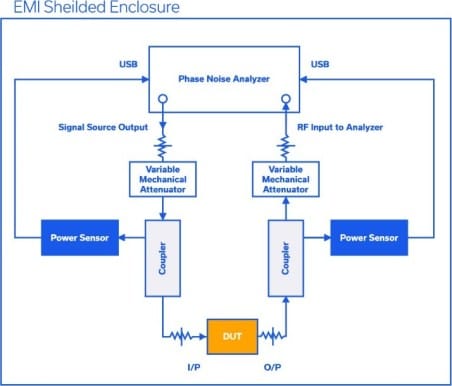
This article will review the challenges in measuring additive phase noise in Amplifiers and present details of the measurement setup Mini-Circuits uses to perform these measurements accurately and reliably. We will also dive into the specifics of additive phase noise readings and explain how to interpret phase noise values and measurement plots.
Understanding RF Power Amplifier Classes
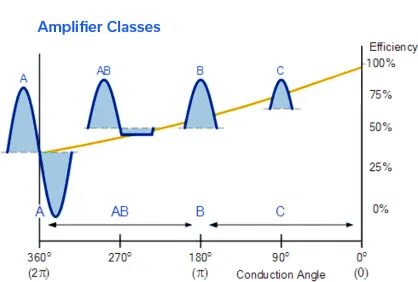
Power amplifiers (PAs) boost input signals using different amplification schemes depending upon application requirements and the nature of the signals to be boosted. Signals may be continuous wave (CW) or many forms of pulsed waveforms, with different pulse widths and duty cycles. Different signal types have different amplification needs in terms of output power, gain, efficiency, linearity, and other performance parameters.
Advanced Microwave Amplifier Models for Advanced Design System Simulations

Mobile and wireless communication has seen phenomenal growth over the past two decades. Faster communication with higher data rates has been the driving factor. To achieve this, the RF front end components have been continuously improved to meet the linearity and power requirements and a range of wireless standards have emerged, based on variations in frequency, modulation and power level requirements. The 0.7 GHz to 6 GHz band has been the mostly widely used frequency range for mobile and wireless communications using different standards such as GSM, CDMA, WCDMA, LTE, WLAN and WiMAX. The evolving 5G standard is pushing frequency ranges for emerging commercial systems upward to mm-wave frequencies as high as 86 GHz! Still, the bulk of near term 5G developments will likely be at the proposed bands of 28GHz and below.
MMIC Amplifiers Stretch the Boundaries of Dynamic Range in VHF/UHF Communications
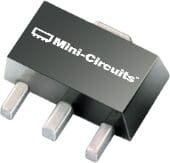
The noise figure and linearity of low noise amplifiers are critical factors in maximizing sensitivity and dynamic range in RF receiver design. The amplifier noise figure determines the weakest signal the amplifier can discern, and the IP3 determines the degree to which intermodulation products from nearby signals interfere with the desired signal. The lower the noise figure and the higher the IP3 of the amplifier at the receiver input, the greater the sensitivity and Spurious Free Dynamic Range (SFDR) of the receiver.
בחירת מגברי MMIC בעלי ליניאריות גבוהה לשימוש בצורות גל ספרתיות מרוכבות
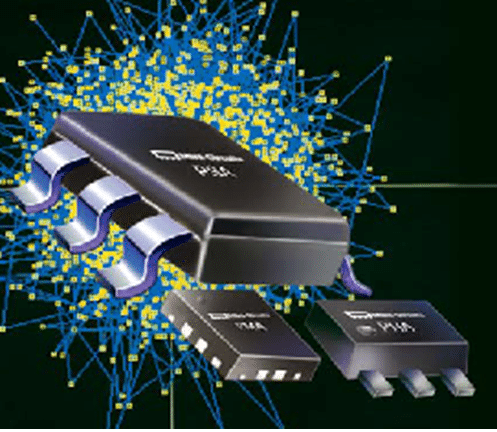
מגברי MMIC (מעגלים משולבים מונוליטיים לגלי מיקרו) המבוססים על טרנזיסטורי גאליום ארסנייד בטכנולוגית PHEMT במצב מורחב (enhanced mode) מספקים למשתמש יתרונות מבחינת ספרת הרעש בפס הרחב ומבחינת ביצועי האפנון ההדדי (intermodulation), אשר מבדילים אותם מהדורות הקודמים של תכנוני מגברי גאליום ארסנייד.
Hi-Rel Components for Space Applications
The extreme operating conditions of the space environment combined with lack of access for repairs and zero tolerance for failure necessitate intensive qualification of electronic parts used in space missions. Mini-Circuits has a successful track record of screening components for space applications, and our experience in this area has led to robust testing and qualification programs for the parts we supply for these systems.
Selecting High Linearity MMIC Amplifiers for use with Complex Digital Waveforms
Enhanced Mode GaAs PHEMT (E-PHEMT) based MMIC amplifiers provide users advantages in both broadband noise figure and intermodulation performance, setting them apart from previous generations of GaAs amplifier designs. Historically known for their extremely low noise figure, PHEMTs have also been used extensively for power applications in the mobile PA market. Recent designs possess a combination of low noise and excellent suppression of intermodulation distortion, which improves both ends of the dynamic range over broad frequency range.
ביטול השימוש ב-Bias Tee במוצא של מגברי Push–Pull באמצעות שימוש בשנאי 3:1 לא מאוזן למאוזן TCM3–452X+
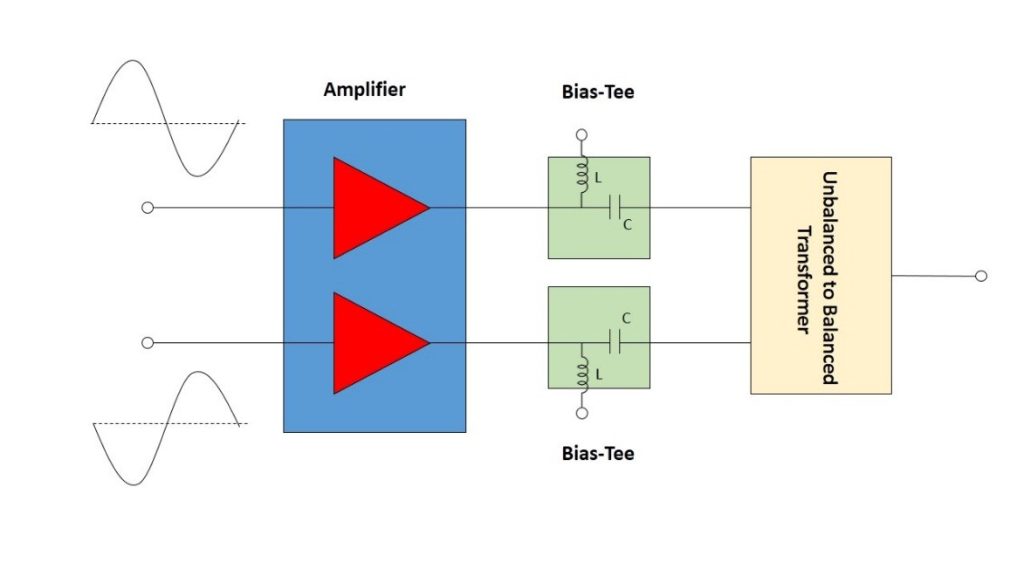
מגברי Push-Pull (דחף-סחב) משמשים במערכות מרובות אוקטבות כדי לשפר את הספק המוצא והנצילות של המגבר, לדכא הרמוניות לא רצויות ולשפר את הטווח הדינמי של המערכת. בתכנון של מגבר Push-Pull אות המקור מסופק לשני טרנזיסטורים או מגברים מתואמים במקביל וביחס מופע (פאזה) של 180º. כאשר מחברים אותם מחדש בעזרת התקן מסכם שני בהזזת מופע של 180º, האותות הבסיסיים נמצאים במופע אחד ובסיכום של פעמיים ההספק של כל מחצית, שעה שההרמוניות מסדר זוגי הן במופע הפוך, וכך מתבטלים באופן אידיאלי האותות הבלתי רצויים האלו. במציאות, חוסר האיזון של המופע והמשרעת (אמפליטודה) של מעגלי הפיצול והסיכום גורם ל”קלקול” של הביטול האידיאלי. עם זאת, התוצאה הנקייה היא עדיין דיכוי משמעותי של ההרמוניות הזוגיות, בדרך כלל ב- 20 dB עד 40 dB.
Eliminating Bias Tees from Push-Pull Amplifier Outputs Using TCM3-452X+ 3:1 Unbalanced-to-Balanced Transformer
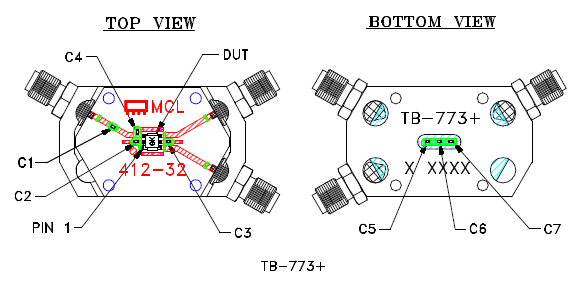
Push-pull amplifiers are used in many multi-octave systems to enhance amplifier output power and efficiency, suppress unwanted harmonics and improve system dynamic range. In a push-pull amplifier design, two matched transistors or amplifiers are supplied by the source signal in parallel and at a 180° phase relationship. When re-combined through a second 180° phase shifting combiner, the fundamental signals are in-phase and combined at twice the power of each half, while the even order harmonics are out-of-phase, creating ideal cancellation of these unwanted signals. In reality, the phase and amplitude unbalance of the splitting-combining circuits result in degradation of the ideal cancellation. However, the net result is still significant suppression of the even harmonics, typically by 20 to 40 dB.