
TEST
SOLUTIONS
Mini-Circuits’ modular switch systems offer flexibility, customizable functionality and fast turnaround for automated test setups. Choose one of our standard benchtop or rack-mount chassis structures and configure your system with our industry-leading range of rugged and high-performance mechanical switches. Mini-Circuits’ smart modular controller provides a single interface to your system, with complete software and applications support.
Best viewed on desktop.
Please use the below filters to narrow down your search according to your required parameters.
You may also sort each column (alphabetic or numeric) by clicking on their header.
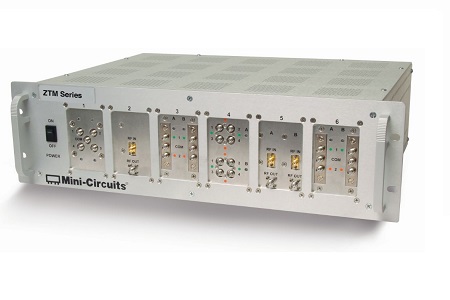
ZTM-series systems may be outfitted with your choice of mechanical SPDT, SP4T, SP6T, SP8T, and transfer switches as well as programmable attenuators (0-30, 60, 90, 110, and 120 dB) resulting in hundreds of possible configurations. All models are controlled via USB and Ethernet-TCP/IP (HTTP and Telnet protocols), allowing setup flexibility and easy remote test management.
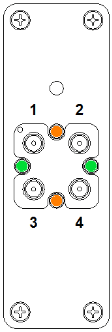
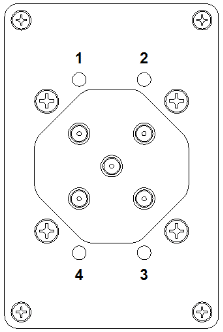
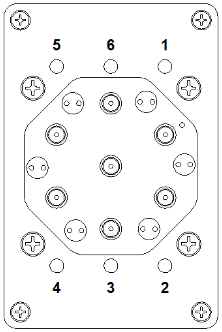
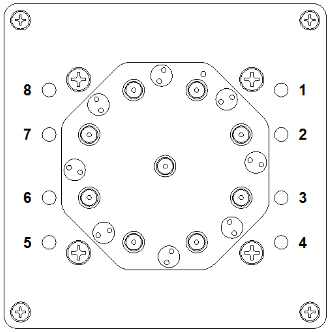
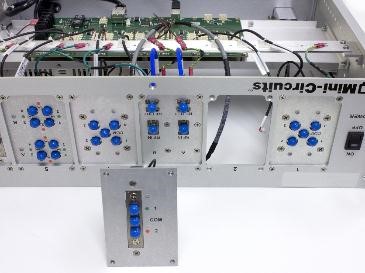
Mini-Circuits’ ZTM series modular switch & attenuator systems offer flexibility and fast turnaround for automated test setups. The design consists of a 19” rack chassis (3U height) comprising up to 12 open hardware slots on the front panel, customizable from a wide range of switch or attenuator options:
With the use of Mini-Circuits’ low cost Hand-Flex™ interconnect cables, multiple matrix configurations can be easily created by the user. The switches are controlled via USB or Ethernet, allowing control directly from a PC, or remotely over a network. Full software support is provided, including our userfriendly GUI application for Windows and a full API with programming instructions for Windows and
Linux environments (both 32-bit and 64-bit systems).
Quick Setup Guide How to connect and get started with Mini-Circuits’ software controlled systems.
Program Examples & Troubleshooting Reference tables and worked examples in a range of programming environments.
App Note-AN-49-001 Summary of software support for Mini-Circuits test equipment.
App Note-VISA Control Instructions for controlling Mini-Circuits test equipment using VISA.
Fill out the form if you need help choosing a part or if you have any questions, and we will get back to you as soon as possible.
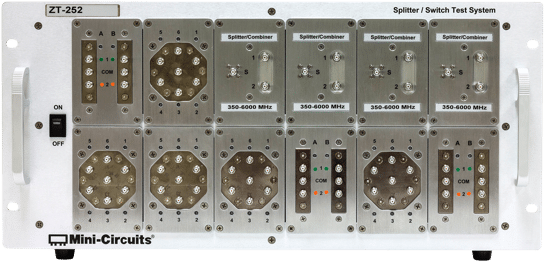
ZTM2-series systems allow you to configure hundreds of possible combinations of mechanical SPDT, SP4T, SP6T, SP8T, and transfer switches, 2-way power splitter / combiners as well as custom component options available on request. All models are controlled via USB and Ethernet-TCP/IP (HTTP and Telnet protocols), allowing setup flexibility and easy remote test management.





Mini-Circuits’ ZTM2 Series is a 19-inch rack-mountable (5U height), modular switch system with up to 24 customizable hardware slots on the front panel. The platform supports a wide range of high-reliability mechanical switch options and passive components. Choose from:
The modular structure allows an extremely wide variety of custom configurations with exceptionally fast turnaround times.
The system can be controlled via USB or Ethernet (supporting both HTTP and Telnet network protocols).
Full software support is provided, including our user-friendly GUI application for Windows and a full API with programming instructions for Windows and Linux environments (both 32-bit and 64-bit systems).
Quick Setup Guide How to connect and get started with Mini-Circuits’ software controlled systems.
Program Examples & Troubleshooting Reference tables and worked examples in a range of programming environments.
App Note-AN-49-001 Summary of software support for Mini-Circuits test equipment.
App Note-VISA Control Instructions for controlling Mini-Circuits test equipment using VISA.
Fill out the form if you need help choosing a part or if you have any questions, and we will get back to you as soon as possible.
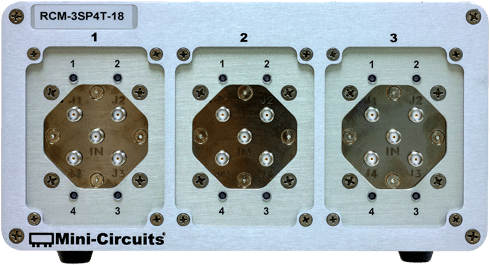
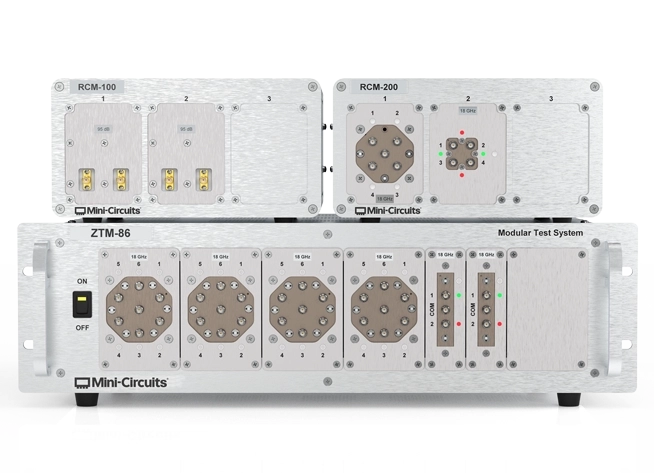
Mini-Circuits’ RCM series modular test systems offer flexibility and fast turnaround for compact test setups. The design consists of a small, light-weight chassis with up to three open hardware windows, each of which may be outfitted with your choice of programmable attenuators or switches.
The system can be controlled via USB or Ethernet (supporting both HTTP and Telnet network protocols). Full software support is provided, including our user-friendly GUI application for Windows and a full API with programming instructions for Windows and Linux environments (both 32-bit and 64-bit systems).
Program Examples & Troubleshooting Reference tables and worked examples in a range of programming environments.
App Note-AN-49-001 Summary of software support for Mini-Circuits test equipment.
App Note-VISA Control Instructions for controlling Mini-Circuits test equipment using VISA.
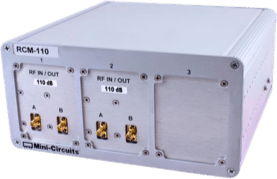
Mini-Circuits’ RCM-100 series multi-channel programmable attenuator systems offer flexibility and fast turnaround for compact test setups. The design consists of a small, light-weight chassis comprising up to three open hardware windows, supporting a flexible choice of programmable attenuator options, with exceptionally fast turnaround time:
Datasheet | User Manual | Programming Manual
With the use of Mini-Circuits’ low cost Hand-Flex™ interconnect cables, multiple matrix configurations can be easily created by the user. The switches are controlled via USB or Ethernet, allowing control directly from a PC, or remotely over a network. Full software support is provided, including our userfriendly GUI application for Windows and a full API with programming instructions for Windows and Linux environments (both 32-bit and 64-bit systems).
Current catalog range of RCM100 multi-channel attenuator systems:
Fill out the form if you need help choosing a part or if you have any questions, and we will get back to you as soon as possible.
Datasheet | User Manual | Programming Manual
Fill out the form if you need help choosing a part or if you have any questions, and we will get back to you as soon as possible.
Fill out the form if you need help choosing a part, need samples or if you have any questions, and we will get back to you as soon as possible.
RF modular test systems are software-controlled, configurable platforms that combine mechanical RF switches, programmable attenuators, and passive components inside a single chassis. They are used to automate signal routing, switching, and attenuation in lab and production test environments — for example, routing signals between multiple DUTs (devices under test) and instruments without manual cable swapping. Mini-Circuits’ ZTM, ZTM2, and RCM series are popular examples, supporting frequencies from DC up to 50 GHz.
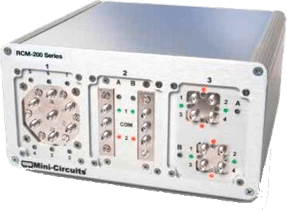
The three series differ in size, slot count, and application scope. The ZTM series is a 19″ rack-mount chassis (3U height) with up to 12 hardware slots, supporting switches up to 18 GHz and programmable attenuators up to 120 dB. The ZTM2 series is a larger 5U rack-mount chassis with up to 24 slots that supports switches up to 40 GHz and adds options like power splitter/combiners. The RCM series is a compact, lightweight benchtop chassis with up to 3 hardware windows, available in attenuator-focused models (RCM-100) and switch-focused models (RCM-200), with switch options reaching 40 GHz.
Mini-Circuits modular test systems cover a broad range of frequencies. SPDT and transfer switches are available from DC to 18 GHz, 26.5 GHz, or 40 GHz depending on the model. SP4T switches cover DC to 18 GHz or 40 GHz, SP6T switches span DC to 12 GHz or 40 GHz, and SP8T switches cover DC to 12 GHz, 26.5 GHz, or 40 GHz. Programmable attenuator modules typically operate from 1 MHz to 6 GHz (or 1–4 GHz for the 120 dB range). Custom configurations up to 50 GHz are also available.
All ZTM, ZTM2, and RCM series systems can be controlled via USB or Ethernet (supporting HTTP and Telnet protocols). Mini-Circuits provides a user-friendly GUI application for Windows, along with DLL-based APIs and complete programming instructions for both Windows and Linux environments (32-bit and 64-bit). VISA control is also supported. This makes the systems easy to integrate into existing automated test environments using languages like Python, C#, LabVIEW, or MATLAB.
Mini-Circuits modular test systems are built to order with fast turnaround. ZTM series systems, for example, typically ship within two weeks from order or less. Because the systems use a standardized chassis with pre-designed modular slots, custom configurations can be assembled rapidly compared to fully bespoke test systems.
Yes. By using Mini-Circuits’ low-cost Hand-Flex interconnect cables to link the front-panel switch and attenuator modules together, users can build a wide variety of custom matrix configurations within the chassis. The modular slot architecture means you choose which switch types (SPDT, SP4T, SP6T, SP8T, transfer) and attenuators populate each window, and then cable them to create the routing topology your test setup requires. Fully custom configurations beyond the standard catalog are also available on request.
The RCM-100 series offers 4-channel and 6-channel programmable attenuator systems. Attenuation ranges include 0–30 dB, 0–60 dB, 0–95 dB, 0–110 dB (all operating from 1 to 6000 MHz), and 0–120 dB (1 to 4000 MHz), all with a fine step size of 0.25 dB. Models with frequency coverage up to 8 GHz are also available on request. Each channel is independently controllable via USB or Ethernet.
Every system ships with a complete accessory kit: an AC power cord, a USB control cable (USB-CBL-AB-7+), an Ethernet cable (CBL-RJ45-MM-5+), an HT-series tight-spot SMA wrench, and a full software package. The software package includes the Windows GUI application, DLL API files, and both a user manual and a programming manual. Additional documentation such as quick setup guides, programming examples with troubleshooting, and application notes on VISA control are available for download.
Modular RF test systems offer three key advantages. First, flexibility: the same chassis can be reconfigured with different switch and attenuator modules as test requirements evolve, without purchasing an entirely new system. Second, speed: because they use standardized building blocks, lead times are measured in days or weeks rather than months. Third, cost-efficiency: the shared chassis, controller, and software platform spread non-recurring engineering costs across a wide range of configurations. This makes them especially attractive for labs and production lines that test multiple product families or need to scale test capacity quickly.
MCDI is the exclusive representative of Mini-Circuits in Israel. Their application engineering team can help you select the right modular test system configuration, provide quotes, arrange samples, and offer local technical support. You can reach MCDI by phone at 077-5406075, through their website contact form, or via WhatsApp. You can also configure your system online and request a free quote directly through the MCDI website.




Before you leave, you should know that MCDI’s professional team of Application Engineers will be delighted to assist you in sourcing the right component. Just fill the form and we will be back to you shortly.