

Affordable Solutions for Testing 28 GHz 5G Devices with Your 6 GHz Lab Instrumentation
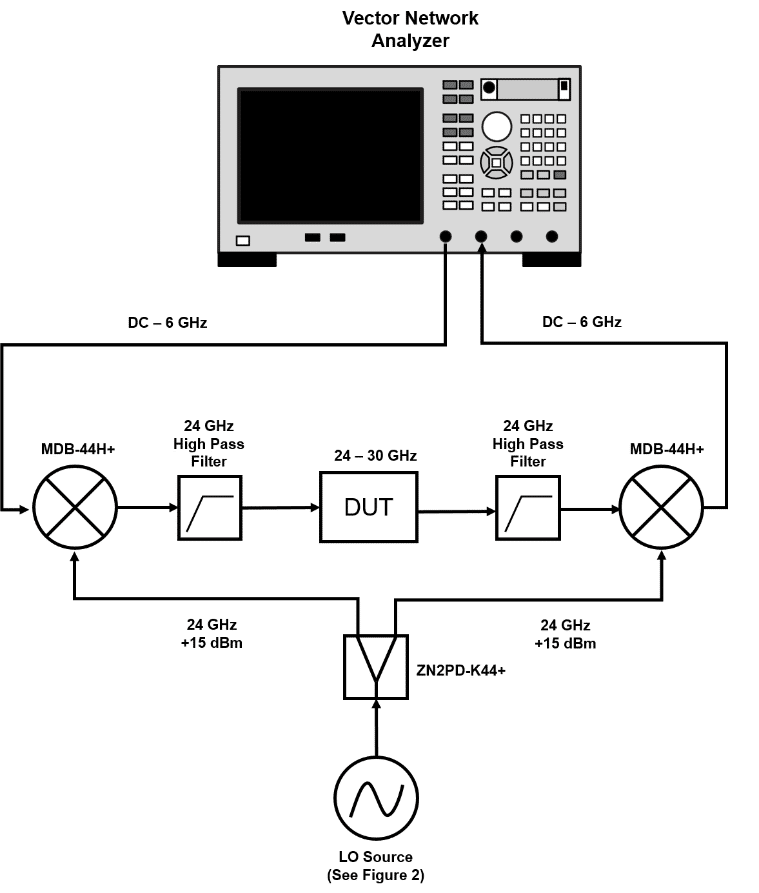
The capabilities that define the 5G wireless standard will require utilization of wider bandwidths across more regions of spectrum than any current wireless technology. 5G communications will eventually occupy multiple bands from below 6 GHz to above 60 GHz. For now, much of the development effort is divided among sub-6 GHz bands for vehicular connectivity and longer-range transmissions, and the 26, 28, 38 and 60 GHz bands for enhanced mobile broadband applications. The migration to higher frequencies and the multi-band nature of the technology pose a variety of unique challenges for designers developing 5G devices and network equipment. Significant among these is the high cost of instrumentation for test and measurement over such a wide range of frequencies.
Hi-Rel Components for Space Applications
The extreme operating conditions of the space environment combined with lack of access for repairs and zero tolerance for failure necessitate intensive qualification of electronic parts used in space missions. Mini-Circuits has a successful track record of screening components for space applications, and our experience in this area has led to robust testing and qualification programs for the parts we supply for these systems.
ADVANTAGES OF CASCADING REFLECTIONLESS FILTERS
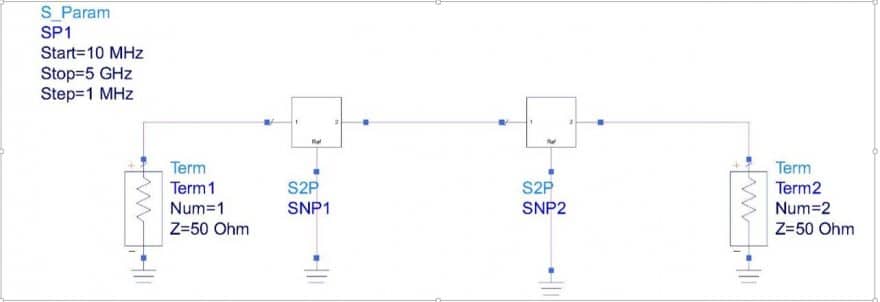
The insertion loss curves for the conventional filter exhibit an expected increase in stopband rejection when two filters are cascaded in series. However, obvious ripple appears across the stopband in the two-section curve. This is due to the unstable phase relationship between the through-signal and reflected signal. Additionally, unwanted ripple is present in the passband close to the band edge of the two-section curve. This is a result of return loss degradation in the passband and reflections in the transition. By contrast, the insertion loss performance for the reflectionless filter repeats itself nicely when cascaded in 2 and 3 sections without any of the ripples or distortion seen in the case of the conventional filter.
Figures 5e through 5h show the effect on return loss when the two types of filters are cascaded in multiple sections. The conventional filter exhibits significant degradation in input and output return loss in the passband when cascaded in two sections – by as much as nearly 20 dB in some regions. When the reflectionless filter is cascaded in two sections, on the other hand, input and output return loss varies over the passband, but the same degradation is not evident, and return loss actually increases at some frequencies relative to that of a single filter. This illustrates that an improvement in return loss in the passband and the stopband can be realized by cascading reflectionless filters versus conventional filters.